
President Donald Trump has intensified his pressure on Tehran, announcing that he will demand war reparations from Iran for the deaths of thousands of American soldiers and countless Iranian civilians over several decades. The announcement came via a series of posts on Truth Social, where the president argued that since Iranian negotiators had requested damages for recent conflict losses, the United States would counter with its own demands. He specifically cited the victims of roadside bombs, the crew of the USS Cole, and those killed during operations linked to General Qasem Soleimani, while also calling for compensation for protesters killed by the Iranian government over the last half century.
These new demands signal a significant impasse in negotiations intended to end regional hostilities and reopen the Strait of Hormuz, a critical artery for twenty percent of global oil trade. While Trump and his team have repeatedly suggested that a diplomatic breakthrough was imminent, these latest requirements are widely seen as a nonstarter for Iranian leadership. To further escalate the stakes, Trump expanded his scope shortly after his initial post, asserting that Iran should also be held financially responsible for casualties and destruction across Lebanon, Syria, Yemen, and Gaza.
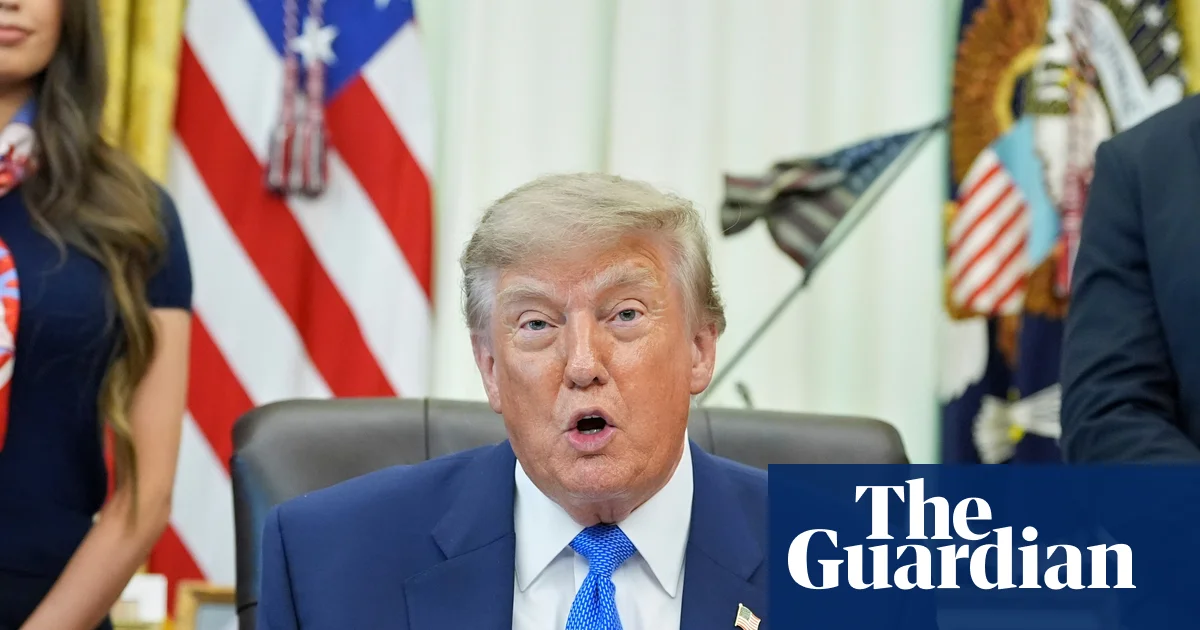
This diplomatic friction coincides with another major setback for the administration’s Middle East strategy. Prime Minister Benjamin Netanyahu recently rejected a fifteen point roadmap backed by Trump to end the war in Gaza, insisting that Hamas must be fully disarmed before any Israeli withdrawal occurs. In a rare public rift between close allies, Netanyahu emphasized that Israel would prioritize its own security over external pressures, even from its strongest partners. Although Trump later described his relationship with Netanyahu as very good during an Oval Office appearance on Monday, the disconnect remains apparent.
The timing of these escalating tensions is particularly sensitive as the U.S. approaches November midterm elections. High inflation and rising oil prices are expected to create political headwinds for Republicans at the polls, adding urgency to Trump’s attempts to stabilize the region. However, with both Tehran and Jerusalem pushing back against current proposals, the goal of ending multiple overlapping conflicts appears increasingly distant despite repeated assertions of progress from Washington.